Embarking on a DIY computer upgrade promises a sense of accomplishment, yet it often unfolds as a chaotic comedy of tangled cables, compatibility surprises, and unexpected mishaps. From wrestling with spaghetti-like wires to troubleshooting elusive hardware issues, the journey is as humorous as it is frustrating. Despite the mess, every small victory—like successfully installing a new component—adds to the thrill of building something with your own hands. Are these hurdles a sign to give up, or do they hint at a future where upgrading becomes smoother and more accessible? With advancements in modular hardware, smarter diagnostic tools, and innovative cooling solutions, the landscape of DIY upgrades is rapidly evolving. This shift promises less chaos and more confidence, opening the door for beginners and seasoned enthusiasts alike. So, what does the future hold for tech revamps—more complexity or a simplified, enjoyable experience? Either way, the adventure remains undeniably rewarding.

Embark on Your DIY Computer Upgrade Journey: Chaos, Confidence, and Comedy
Embarking on a DIY computer upgrade is often the start of a journey that’s as exciting as it is unpredictable. It’s a hands-on experience where you get to take your machine into your own hands—swapping out old parts, installing new ones, and customizing your setup to better suit your needs. Whether you’re upgrading for gaming, video editing, or just to squeeze more life out of your current rig, the process promises a sense of accomplishment and hands-on learning. But let’s be honest, it doesn’t always go as smoothly as the tutorials suggest.
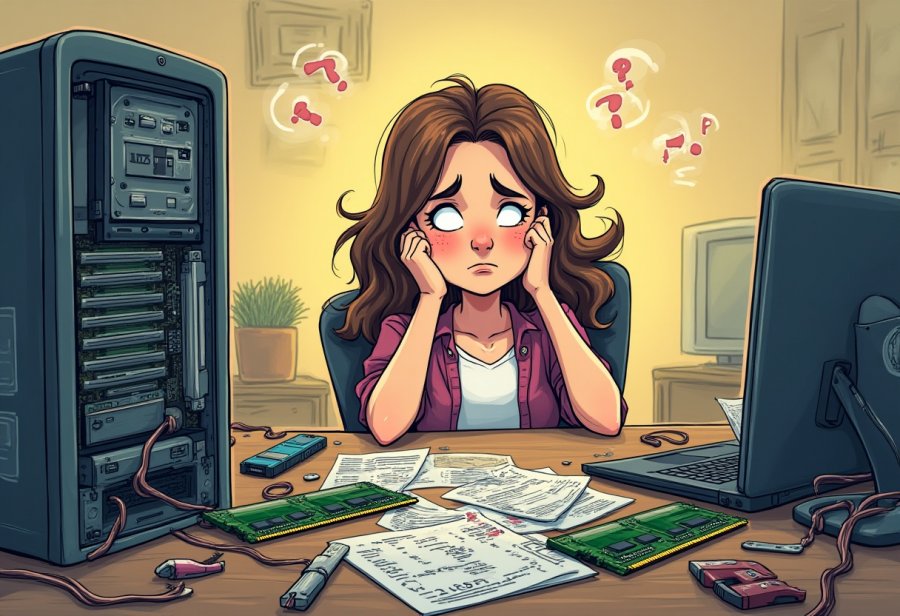
The reality of a DIY upgrade is that it’s often more chaos than control. What begins as a simple task—like adding more RAM or replacing an aging hard drive—can quickly turn into a tangled mess of cables and screws. Cable management, in particular, tends to be the villain of the story, transforming what should be a neat build into a spaghetti nightmare. You’ll find yourself fighting with wires that seem to have a mind of their own, twisting and looping around components just to make your life more interesting.
Many who dive into this world do so with high hopes of a quick, hassle-free upgrade. Instead, they’re greeted by compatibility surprises, confusing manuals written in a language only tech enthusiasts understand, and hardware that refuses to cooperate. It’s not uncommon to force a component into place only to realize it’s the wrong fit, or to discover that an essential cable was left unplugged after hours of troubleshooting. These mishaps often become stories of frustration—and humor—reminding us that patience is a virtue, especially when dealing with tech that seems determined to test your limits.
Then there are the surprises that catch you off guard—like discovering your new graphics card needs more power than your current power supply can deliver or realizing that a tiny screw is missing right when you’re about to close up the case. These little setbacks can feel like setbacks, but they also serve as lessons in humility and perseverance. Sometimes, the biggest challenge is simply figuring out where everything goes, especially when surrounded by an array of tiny screws, cables, and components that all look suspiciously similar.
Troubleshooting becomes a key part of the process, often turning into a comedy of errors. You might spend an hour trying to diagnose why your computer won’t turn on, only to find out you forgot to connect the power cable or misaligned a RAM stick. Tools slip from your hands, and the floor quickly becomes a magnet for small screws and forgotten parts. These moments, though frustrating, become part of the story—stories you’ll laugh about long after the project is done, especially as you realize each mistake is a step toward becoming more confident in your skills.
Despite the chaos, there’s a certain charm in doing it yourself. Each screw tightened and each cable managed is a small victory, a reminder that you’re learning and improving. The mess of wires and the minor mishaps are part of the process, making the final result all the more satisfying. After all, there’s nothing quite like powering up a machine you built with your own hands, especially when you’ve navigated the chaos to get there. It’s a journey of patience, humor, and a little bit of mess—one that turns a simple upgrade into a memorable, often hilarious adventure.

The Hilarious Reality of Tech Upgrade Chaos: Cables, Mishaps, and Surprises
Embarking on a DIY computer upgrade often feels like stepping into a comedy show, where chaos is the main act. One minute, you’re carefully unscrewing the side panel, feeling confident that you’ve got this, and the next, you’re tangled in a web of cables that seem to have multiplied overnight. Wires loop and twist in every direction, transforming what should be a straightforward task into a tangled mess that looks more like a bird’s nest than a tidy build. It’s almost funny how quickly a simple upgrade can spiral into a spaghetti nightmare, with cables knotting themselves in ways you never imagined.
Troubleshooting these cable knots is like trying to solve a puzzle where the pieces keep slipping away or hiding in inconvenient spots. You find yourself rerouting, untangling, and re-plugging for what feels like hours, all while questioning your life choices. Instead of a clean, organized setup, you’re left with a chaotic tangle that seems to have a mind of its own. Just when you think you’re making progress, you realize a crucial cable isn’t plugged in or a screw has gone missing, adding yet another layer of frustration to the scene.
Hardware mishaps are just as common and often just as hilarious. For example, forcing a graphics card into a slot that’s just a fraction too small can lead to a moment of panic—your heart races as you try to force it in, only to realize it’s the wrong component or the wrong orientation. Sometimes, you discover that a part isn’t compatible after all, or that you forgot to remove protective plastic covers, static wristbands, or even that you’ve accidentally grounded yourself with a metal tool. These slip-ups turn what should be a quick, simple upgrade into an exercise in patience and humility, often accompanied by a mix of exasperation and laughter.
Unexpected surprises also seem to pop up just when you least expect them. Maybe your new power supply isn’t quite powerful enough for that shiny new GPU, or you realize a tiny screw is missing right before you close the case. These little surprises throw wrenches into your plans and make you question whether your hardware choices were wise. But in a strange way, they become part of the story—stories you’ll tell later, with a smile, about the time you almost fried your motherboard because you missed a tiny connection or forgot to double-check your cables.
Amid the chaos, it’s often the smallest moments that turn into the funniest stories. Like the time you spent half an hour trying to diagnose why your PC wouldn’t turn on, only to discover you forgot to plug in the power cable. Or the moment you accidentally short-circuited your entire system because you overlooked a loose screw or a misplaced jumper. These mishaps are frustrating at the moment, but they become hilarious anecdotes in hindsight—proof that even in chaos, there’s humor and humanity.
Tools slipping from your hands, screws rolling across the floor, and components that seem to have a mind of their own—every little slip-up adds to the comedy. You may find yourself cursing at a stubborn cable or wrestling with a stubborn screw that refuses to cooperate, all while trying to maintain some semblance of patience. It’s in these moments that you realize the true challenge isn’t just the hardware, but the patience and humor needed to see the process through.
Despite the chaos, many find a strange charm in the mess. Each tangled wire, each misstep, and each small mistake becomes a badge of honor, a reminder that you’re learning and improving. The mess of cables and the minor mishaps are part of the journey, making the final victory—the powered-up, upgraded PC—all the sweeter. After all, there’s something satisfying about turning a chaotic pile of parts into a working machine, especially when you’ve navigated the chaos with a smile on your face.
In the end, these chaotic moments transform into stories worth sharing. They remind us that no tech upgrade is ever perfect, but each one offers a lesson wrapped in laughter. The funny stories of tangled cables, hardware mishaps, and unexpected surprises become part of the experience—proof that even the most chaotic upgrades can lead to a sense of achievement and a good laugh. Because in the world of DIY tech, chaos isn’t just an obstacle; it’s part of the adventure.
Practical Tips to Make Your DIY Upgrade Smooth and Satisfying
To keep your DIY upgrade smooth and enjoyable, start with thorough research. Double-check that every component—motherboard, RAM, GPU, power supply—is compatible before you buy. Watching tutorials, reading reviews, and browsing forums can reveal common pitfalls and help you spot potential issues early on. This upfront effort can save you from surprises like incompatible parts or fit issues that turn a simple upgrade into a frustrating puzzle.
Gather your tools beforehand. A good magnetic Phillips screwdriver, an anti-static wristband, and some cable ties or Velcro straps are essentials. Having everything within reach minimizes interruptions and prevents lost screws or accidental damage. Working on a clean, static-free surface keeps your hardware safe and your workspace organized, making the process less chaotic from the start.
Patience is your best friend during a build. Take your time with each step—rushing often leads to mistakes like forcing parts into wrong slots or forgetting to reconnect cables. Follow instructions carefully, and if something doesn’t seem right, pause and double-check. A quick online search or second look can clarify issues, saving you time and preventing damage. Moving slowly and deliberately keeps the project manageable and reduces the risk of costly errors.
Stay organized as you work. Take photos or make notes of how cables are connected and where each screw belongs. Labeling cables with masking tape and a marker can prevent mix-ups during reassembly. This small step makes the process cleaner and faster, especially when handling similar-looking connectors or multiple screws. An organized approach helps avoid accidentally leaving something unplugged or installing parts incorrectly.
Before powering on, double-check everything. Confirm that all cables are securely plugged in, components are seated correctly, and no loose screws remain. It’s easy to overlook a tiny connection or forget to reconnect a power cable, and these mistakes can cause hardware conflicts or system failures. Taking a few moments for a thorough review can save hours of troubleshooting later and ensure your upgrade runs smoothly from the start.
Finally, once everything is in place, run some tests to verify your work. Check temperatures, performance, and system stability to make sure the upgrade is functioning as intended. If you encounter issues, revisit your connections or settings—most problems are fixable with a little patience. Following these practical tips transforms what could be a chaotic experience into an engaging project that leaves you confident and proud of your handiwork.
The Bright Future of DIY Computer Upgrades: Innovations, Trends, and the Taming of Chaos
The future of DIY computer upgrades is poised to become more seamless and user-friendly, thanks to a wave of innovative trends that are reshaping the landscape. Modular hardware design is leading the charge, making it easier than ever to swap out components like RAM, SSDs, or even graphics cards. These parts are evolving into plug-and-play modules, turning what used to be a fiddly, cable-laden process into a straightforward, almost toy-like experience. This shift not only reduces the technical barrier for newcomers but also encourages more frequent upgrades, keeping your system fresh without the headache.
Alongside hardware, smarter diagnostic and troubleshooting tools are transforming the upgrade process. Artificial intelligence and machine learning are now integrated into software that can analyze your system, identify compatibility issues, and even suggest the best upgrades based on your current setup. This means fewer hours spent googling obscure error messages or guessing which component is causing trouble. Instead, you get guided insights that streamline the entire experience, making it less daunting for first-timers and more efficient for seasoned builders.
Cooling technology, once the domain of high-end enthusiasts, is also advancing rapidly. Compact liquid cooling kits are becoming more accessible, easier to install, and more reliable. These systems help keep high-performance hardware cool without the messy maintenance of traditional air cooling—eliminating tangled fans and bulky heatsinks. As cooling solutions become more integrated and less intrusive, building powerful, tidy rigs won’t require sacrificing space or aesthetics, making high-end performance achievable for a broader audience.
The trend toward smaller, more compact form factors continues to grow. Mini PCs and sleek, space-saving cases are reshaping how we think about DIY builds. These designs promote better cable management and less clutter, tackling the spaghetti nightmare head-on. As components shrink in size but grow in power, DIYers can craft impressive, portable systems that are not only high-performing but also easy to upgrade and maintain. This movement makes chaos less of a norm and turns tidy, efficient setups into the new standard.
Meanwhile, the software side is catching up with hardware innovation. User-friendly BIOS interfaces, simplified driver management, and intuitive configuration tools are lowering the barrier for newcomers. Online communities, streaming guides, and real-time support are making the upgrade process more accessible and less intimidating. As these technologies and resources continue to improve, upgrading your PC is shifting from a nerve-wracking ordeal to an engaging hobby. The chaos we once associated with DIY upgrades is gradually giving way to a landscape where creativity and confidence flourish, making the future of DIY computing brighter and more approachable than ever before.